
Federal ERJ Release Routes
WVDCR’s FY2024 institutional data include federal pretrial detainees in the ERJCF custody mix. ERJ is a state regional jail, yet the legal custodian for one person may be federal. The U.S. Marshals Service controls federal prisoners from arrest through acquittal or commitment and can use contract state or local beds. After conviction and designation, the Bureau of Prisons becomes the main locator route. ICE is a separate immigration authority.
Departure from ERJ can therefore mean release under a federal court order, transport by USMS, designation to a BOP institution, transfer to ICE, or another placement. The WVDCR exit only proves that state-facility custody changed. It does not by itself prove community release. Identify the receiving authority in the ERJ record or federal docket, then continue in that agency’s system.
Compare Federal Release Systems
Each federal source answers a narrow question. USMS manages the pretrial prisoner but offers no public historical locator comparable to BOP. The federal docket can show a detention or release order. BOP covers federal inmates from 1982 forward and can display a past release date or a “Not in BOP Custody” status. ICE’s Online Detainee Locator System, or ODLS, covers some current immigration detainees and some people released from ICE custody within the prior 60 days.
| System | Use it for | Main limit |
|---|---|---|
| ERJ/WVDCR | Physical stay and exit from the state regional jail | Exit may be a federal transfer |
| USMS and federal docket | Federal pretrial custody and court release authority | No public USMS historical locator found |
| BOP locator | Federal prison placement and past release date | Does not cover state jail or ICE custody |
| ICE ODLS | Some current and recent immigration custody records | A not-found result is inconclusive |
A single blank result should never close the search. A person can leave ERJ before appearing in BOP. Someone not in BOP can remain on federal supervised release or enter another authority’s custody. An ICE exact-name mismatch can hide an existing record. Use identifiers, dates, and the federal case number to keep the four routes aligned.
BOP Federal Release Lookup
The official BOP Inmate Locator searches by BOP, DCDC, FBI, or INS number. A name search can add age, race, and sex refiners. Identifier search is safer when names are common. Compare the returned identity and register number before reading the custody line. A future release date is projected and may change after recalculation.
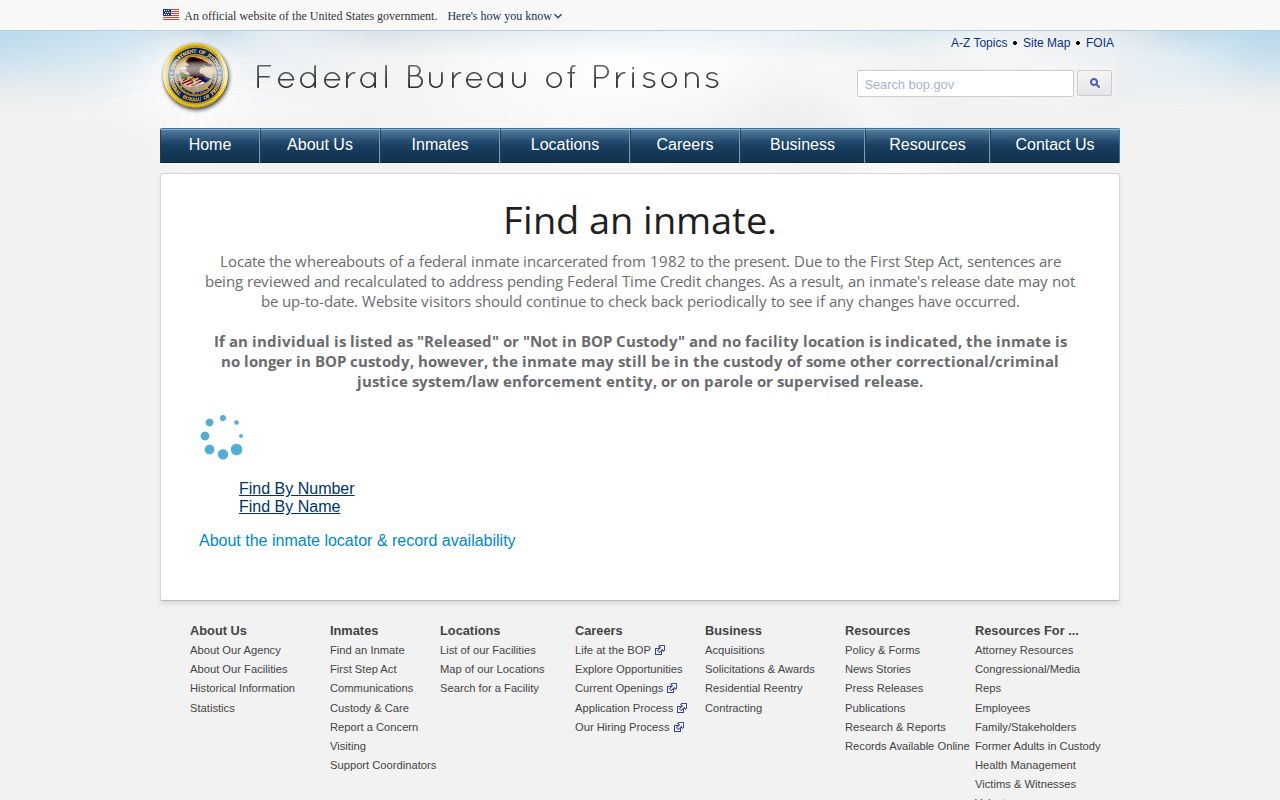
The captured official search page shows the federal locator used after BOP designation. It does not replace the ERJ record for the earlier contract-jail stage.
- Search by a verified federal identifier when one is available.
- Otherwise enter the full name and use only known refiners.
- Compare the name, number, age, and status before selecting the result.
- Record the displayed facility or release wording and check date.
- Match the result to the federal judgment, commitment, or release order.
BOP explains that a past release date with no facility means the person was released on that date and is no longer in BOP custody. “Released” or “Not in BOP Custody” does not rule out federal supervision, a new case, state custody, or ICE custody. Use the docket and the next relevant locator before describing the person’s present status.
BOP Release Record Meaning
The BOP’s official records explanation supplies the context needed to read a federal result. It states the locator’s date coverage and explains how release information appears. That source matters because a short status label can be easy to overread.
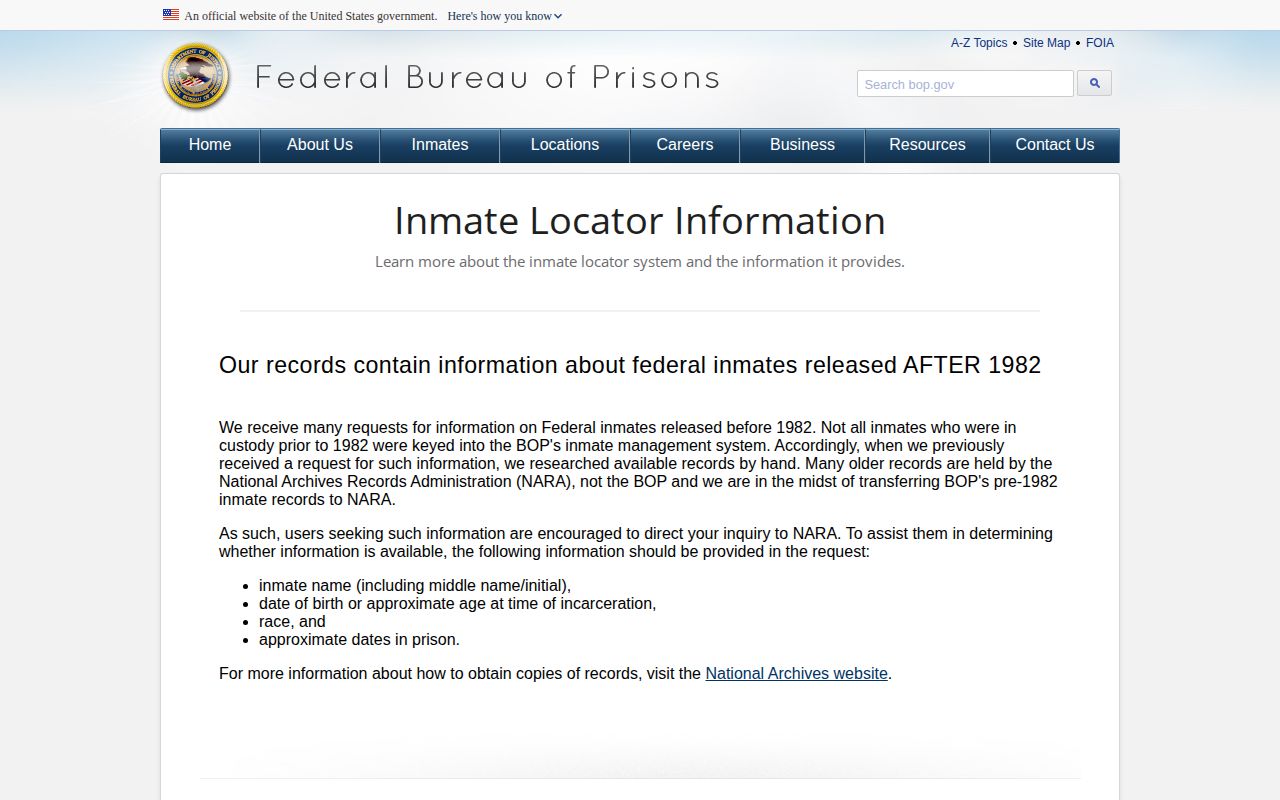
The captured explanation supports the difference between no longer being in BOP custody and being free of every other legal status.
“UNKNOWN” means the confinement term is not determined. It is not a release. A past BOP release date is stronger evidence that BOP incarceration ended, but the federal docket remains the better source for sentence and supervised-release terms. Supervised release is a court-ordered period in the community after imprisonment. It differs from WVDCR parole and does not appear simply because a BOP facility field is blank.
USMS Federal Release Proof
For a federal pretrial person, begin with the federal docket and the detention or release order. USMS maintains custody from arrest through acquittal or commitment and arranges transport among contracted facilities. No public USMS historical person locator was found in the official source review. BOP may have no record before commitment or designation, so a missing BOP result cannot prove that a pretrial person left federal control.
Federal and ERJ Custody Contacts
ERJCF: 94 Grapevine Road, Martinsburg, WV 25405
ERJCF phone: 304-267-0045
USMS Martinsburg office: 304-267-7179
Federal district: Northern District of West Virginia
Ask ERJ or WVDCR for the disclosable exit event and receiving authority. Ask the court clerk for the signed order. Ask USMS only for disclosable custody confirmation, not protected transport or operational details. If the docket shows commitment after conviction, move to the BOP locator. If it shows release conditions, distinguish the judicial decision from the later physical exit time.
ICE Immigration Release Checks
ICE ODLS accepts an exact full name plus A-number, or date of birth and country of birth. ICE says the locator includes some people in current custody and some released from ICE custody within the previous 60 days. It does not display people under 18. Records may also be withheld for safety or agency reasons, exact spelling matters, and processing can lag.
A state or federal handoff to ICE is continued custody, not release to the community. Likewise, “not found” cannot prove release, removal, or the absence of custody. Retry with verified spelling and the A-number. Then contact the appropriate Enforcement and Removal Operations office when the result remains unclear. Do not substitute a BOP result, ERJ absence, or state court docket for ICE confirmation.
When ODLS displays a recent release, record the result date and match it to the immigration record or agency confirmation. The 60-day reference is a locator scope, not a promise that every released person will appear for the full period. Suppressed cases and delays remain possible.
Federal ERJ Grapevine Transfers
Berkeley County’s Grapevine Road facilities create an extra transfer trap. The original Eastern Regional Jail building opened in 1989 and now houses Martinsburg Correctional Center and Jail, the state male intake and classification unit. The current ERJCF site has operated since September 1999. A person can move between these state facilities or onward after classification without entering the community.
For a federal detainee, the same caution extends beyond WVDCR. Movement out of ERJ can lead to USMS transport or later BOP designation. An immigration detainer can instead produce an ICE transfer. The ERJCF release route establishes what happened at the state facility, while the receiving federal system establishes the next status. This tailored facility-history rule keeps a change of building from becoming a false release claim.
Confirm Federal Community Release
Use at least two independent layers. For pretrial release, pair the federal court order with direct custody or ERJ exit confirmation. For a BOP sentence, pair the locator’s past release date with the federal judgment or BOP record. For immigration custody, pair ODLS or ERO confirmation with the transfer or release record. Always state which authority’s custody ended.
Reconcile dates rather than forcing them to match. A court order can precede jail processing. USMS movement may occur before BOP designation becomes searchable. ICE intake may follow an ERJ exit. If only one current search is blank, report that narrow fact and keep the release unconfirmed. If a transfer is documented, name the receiving system and continue there. That wording protects the basic difference among facility departure, agency transfer, release under conditions, and final freedom from custody.
Preserve the person’s federal register number, A-number when lawfully known, ERJ booking range, case number, and every search date. Identifiers connect records that use different facility names or status terms. They also reduce false matches among similar names. When an agency limits disclosure, request only the disclosable custody date, release category, and receiving authority, while allowing protected operational or personal details to remain withheld.